

Ground Shift or Power Shift: Mark Rey – The Timber Industry’s National Forest Overlord (Part II of III)
Part of a three-part series on the Ground Shift initiative. This installment examines Mark Rey’s role in rewriting the rules for America’s national forests.

Read Part I: Ground Shift or Power Shift? Is a Ground Shift in the environmental movement a good idea, or not?
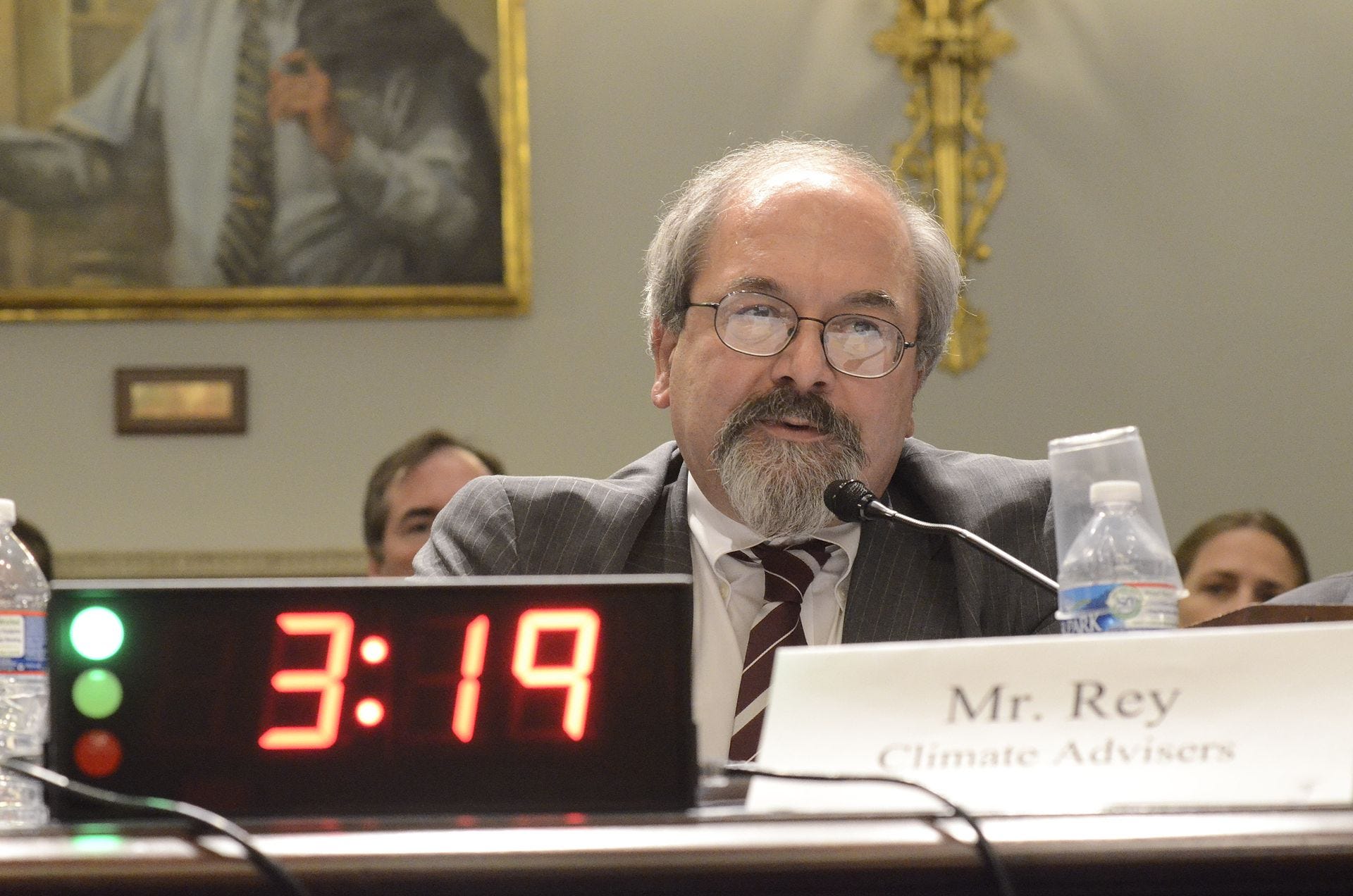
Mark Rey is one of the central figures in the Ground Shift initiative. His career in the timber industry and in federal policy helps explain why we are deeply skeptical of where this effort is headed.
Rey’s early career ran the gamut of timber industry lobbying groups from 1976 to 1992, including American Paper Institute, National Forest Product Association, American Forest Resource Alliance, and culminating with a stint as executive director of the American Forest and Paper Association. A timber lobbyist through and through, Rey was devoted to the concept of the “working forest” where success was measured in board-feet of lumber, and the welfare of interior forest wildlife or trout and salmon streams could be waved away as an extravagance.
Rey next went on to work for Sen. Larry Craig (R-ID) as a staffer on the Senate Energy and Natural Resources Committee, which gave the timber industry its inside man in writing federal laws that suited their appetites. He played a major role in an amendment to fast-track the industrial destruction of post-fire forests, before they had the chance to recover. It was tacked onto must-pass legislation intended to fund recovery from the Oklahoma City bombing of the Alfred P. Murrah federal building.
The salvage rider amplified logging in the Pacific Northwest, authorizing the Forest Service to approve massive expansion of logging on national forests, without any public comment or environmental review, exempting logging from environmental laws that would otherwise apply, and barring lawsuits that could challenge them.
While the term “salvage logging” applies most commonly to forests that have burned, the salvage rider defined “salvage” broadly, to include trees “imminently susceptible to fire or insect attack.” Under this definition, any tree in a forest would qualify during dry weather. One Forest Service timber sale manager was told by her supervisors that “virtually every sale should include salvage in the name…even if a sale is totally green, as long as one board comes off that would qualify as salvage on the Salvage Sale Fund Plan, it should be called salvage. It’s a political thing.” The timber industry immediately sued to require timber sales of all kinds held up by Endangered Species Act violations and other concerns, to be released for logging under the salvage rider. A federal judge granted them their request.
With a career as a timber lobbyist and experience in crafting legislation to circumvent environmental protections and public participation in forest management, Mark Rey was the selection of choice by the George W. Bush administration in 2001 to oversee the National Forest system as USDA Undersecretary for Natural Resources and Environment. In his confirmation hearing, he advocated for collaborating with states rather than asserting federal authority in federal reserved water rights for in-stream flows, and advocated for local control of national forest decisions. He would put these ideas to work undermining wildlife protections and fast-tracking the clearcutting of public lands.
In 2006, both Rey and Lynn Scarlett—then Deputy Secretary of the Interior under George W. Bush, who we will cover in Part III of this series—testified in favor of the Forest Emergency Recovery and Research Act (HR 4200). A reincarnation of the salvage rider (but designed to be permanent), the Act tasked agencies to draw up a list of projects, including logging of dead trees or those deemed likely to die within 5 years, that would be exempt from NEPA environmental reviews and public comment. Meanwhile, science has shown that salvage logging impairs forest recovery. The bill died in the Senate, never to be revived. It was unquestionably a bad idea.
The Healthy Forests Restoration Act is considered Rey’s “signature accomplishment.” HFRA gave the Forest Service and BLM broad authority to recharacterize logging projects as fuels reduction, limited public comments and appeals, and restrained the power of courts to block such projects when they were found to violate federal law. A healthy forest, under this law, was one that had been reduced to stumps. On signing HFRA, President Bush personally recognized the leading roles of both Rey and Scarlett. The new legislation made it nearly impossible to stop any logging project tagged with “HFRA” through appeals or litigation.
Under Rey, the Forest Service issued new regulations for Forest Plans, which deleted the requirement to maintain viable populations of native wildlife across each National Forest, and skip public involvement and environmental impact statements when Forest plans were revised or amended. Rey also led the Bush Roadless Rule repeal, in which the regulations protecting roadless areas on National Forests from logging and road construction were dismantled. In its place, the Bush Roadless Rule stripped Roadless Areas of protection unless the governor specifically, and successfully, petitioned the Forest Service to implement specified protections. As a Washington Post editorial put it, “rather than having national forests governed by a national standard, decisions would be influenced by local politicians subject to local pressures and special interests, specifically timber companies that enjoy a fat subsidy in the form of government-supported roads and timber sales.”
Forest Service employees charged with assessing the 720,000 public comments supporting continued Roadless protections were ordered by Rey to strip the report of references to the number of public comments received and their opinions on the subject. Many states petitioned that the original protections be maintained, while other states petitioned for weakened protections or no protections at all. The Bush Roadless Rule was ultimately overturned by the courts for failing to take the legally-required “hard look” at environmental impacts of removing Roadless protections.
Rey’s contempt for environmental laws and regulations was spotlighted in 2008, when he was threatened with jail time by a federal judge for continuing to authorize the unlawful aerial spraying of flame retardant chemicals harmful to native fishes.
But an anti-environmental rap sheet as long as your arm didn’t stop Rey from peddling his connections and across-the-aisle influence to conservation groups. Mark Rey was hired as a lobbyist by Trout Unlimited, Idaho Conservation League, and Wildlaw in 2011, in opposition to off-road vehicle use on public lands, taking a position seemingly at odds with his pro-industrialization ethos.
And now, he has been tapped to generate ideas for the future of the conservation movement. What could go wrong?
Erik Molvar is the executive director of Western Watersheds Project.
This piece is part of a three-part series examining the network of power behind the Ground Shift initiative—and the records of the officials now positioned to shape conservation’s future. Read part I here.
Reporting on the people with the political power and their motivations to rewrite/interpret/twist the meaning of environmental and land conservation is important. How else will we know how to save ourselves from our short-sighted impulses?